 11
11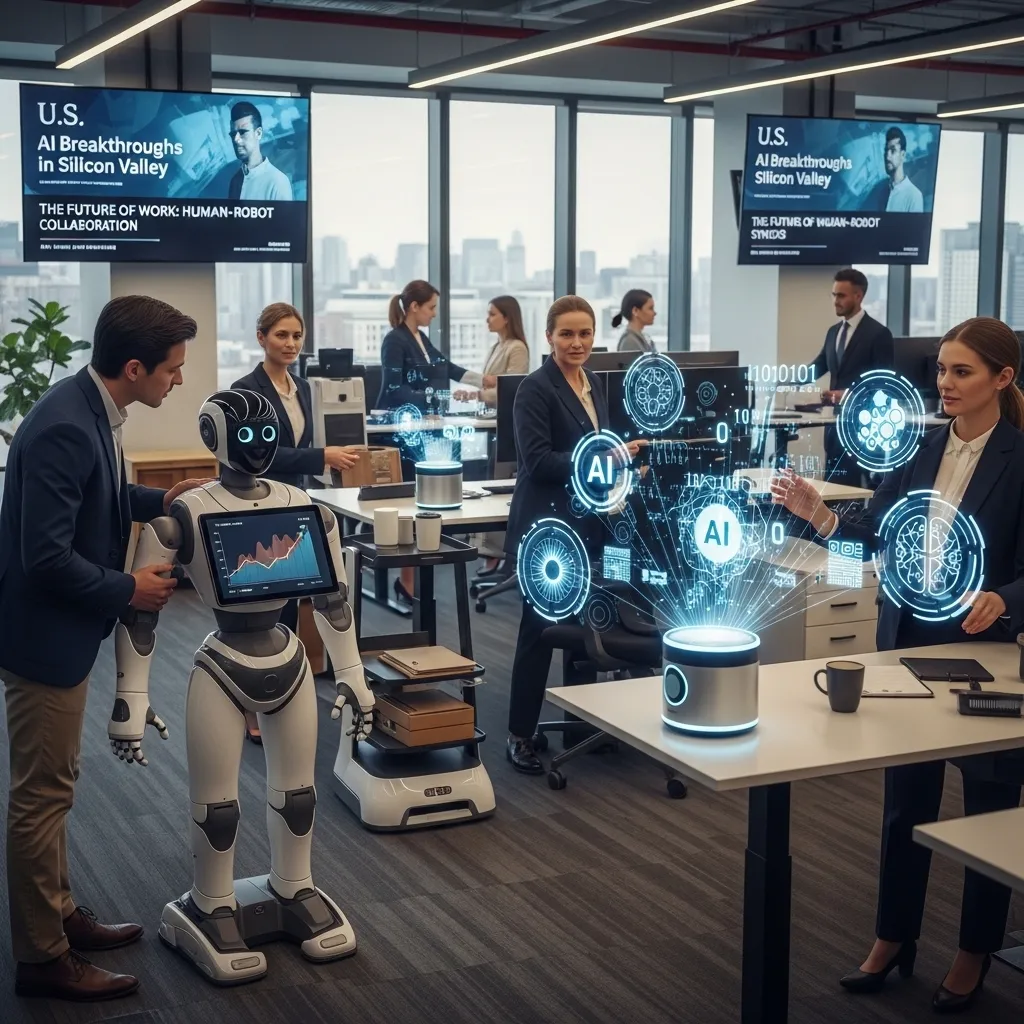
Artificial intelligence (AI) and automation have shifted rapidly from science fiction to everyday reality. What once seemed futuristic is now embedded in how companies operate, how people work, and how Americans live. From self-checkout kiosks at supermarkets to AI tools that draft emails, recommend medical diagnoses, or guide manufacturing robots, these technologies are transforming the workplace in real and measurable ways.
In the United States, this transformation is profound. AI and automation are reshaping industries, redefining job roles, and prompting both excitement and concern among workers, employers, policymakers, and educators. While some see these changes as a path to greater efficiency and new opportunities, others worry about job displacement and wage pressure.
This article explores how AI and automation are altering the employment landscape across the United States, what jobs are most affected, what new opportunities are emerging, and what everyday Americans should know to stay prepared and competitive in a rapidly evolving labor market.
Artificial Intelligence (AI) refers to computer systems capable of performing tasks that typically require human intelligence — such as understanding language, analyzing data, recognizing patterns, and making decisions.
Automation involves using machines or software to perform repetitive or predictable tasks with minimal human intervention.
Together, AI and automation include technologies such as:
These technologies are becoming mainstream in the U.S. economy, affecting a diverse range of occupations from entry-level roles to high-skill professions.
Jobs involving repetitive and predictable tasks are most vulnerable to automation. These include roles in:
Machines and AI systems excel at tasks that are rule-based and high-volume. As a result, employers across the U.S.—from factories in the Midwest to distribution centers in the Southeast—are adopting automation to improve efficiency and reduce costs.
AI isn’t limited to blue-collar jobs. Increasingly, mid- and high-skilled roles are being augmented or transformed by intelligent tools:
In these cases, AI doesn’t always replace workers but changes how work is done, often speeding processes and requiring new skill sets.
Contrary to the idea that automation will simply “take jobs away,” the reality is more nuanced. Certain jobs are more likely to be transformed rather than fully eliminated. Examples include:
| Sector | Occupations | Likelihood of Change |
|---|---|---|
| Manufacturing | Assembly workers, machine operators | High |
| Retail | Cashiers, stock clerks | High |
| Transportation | Truck drivers (with automation systems) | Moderate |
| Office/Admin | Basic data entry, scheduling | High |
| Healthcare | Medical transcription, preliminary diagnostics | Moderate |
Workers in these fields may find their roles changing — with some tasks automated while others that require creativity, empathy, or complex judgment remain human-centered.
While some roles face pressure, others are growing rapidly thanks to technological advancements:
Demand for professionals who can build, maintain, and improve AI systems is increasing in technology hubs across the United States, including Silicon Valley, Austin, and Boston.
As companies collect more data, experts who can interpret data and generate actionable insights are in high demand.
With increased automation and online systems, protecting digital systems is a high priority across industries.
Companies also need professionals who ensure AI systems are safe, fair, transparent, and compliant with U.S. regulations and industry standards.
Many employers now use AI-powered systems to screen resumes, assess candidate fit, or even conduct preliminary interviews using automated tools.
While this can speed up hiring, it also raises questions about fairness and bias in algorithms.
Employers across the U.S. are investing in workforce training to help current employees adapt to technology changes. Examples include:
Employees who embrace continuous learning are more likely to thrive in an evolving job market.
Adaptability is now a key workplace skill. This doesn’t mean everyone must become a programmer, but workers should be open to learning new tools and evolving tasks.
Jobs requiring:
are less likely to be fully automated and remain in demand across sectors.
Whether through community college programs, online certificates, or employer-sponsored training, educational investment is increasingly valuable.
AI-driven diagnostic tools, wearable device data analysis, and automated administrative systems are reshaping healthcare delivery across the U.S.
Banks and financial services use AI for fraud detection, automated advising, and customer service applications.
Self-checkout, automated inventory systems, and personalized online shopping experiences are becoming standard.
Autonomous vehicles and automated warehouse systems are reshaping how goods move across the country.
Policymakers at the federal and state level are paying attention to the changing nature of work. Discussions include:
These efforts aim to balance innovation with economic inclusion.
Follow credible U.S. tech and labor news to understand how changes affect your industry.
Focus on areas like data literacy, digital tools proficiency, and industry-specific technology applications.
Continuous learning, whether through online platforms or community programs, will be a core advantage.
No, but it will change many jobs and eliminate some tasks while creating new roles.
Many routine tasks are at risk, but overall impact varies by role and industry.
Not necessarily — non-tech skills like creativity and problem-solving remain valuable.
Upskill, stay informed, and be open to role evolution.
No — small and medium businesses are adopting automation too.
They assist HR but still require human oversight.
Yes, various federal and state initiatives exist to support workforce transition.
It may shift wage patterns depending on demand for specific skills.
Some tasks are automated, but humans remain essential in many areas.
Regulation is evolving, with new guidelines and standards under discussion.